
Harbin eats like the city it is — a Russian-flavoured railway town on a frozen river, with a Chinese kitchen that never got the memo about shrinking portions. Staying fifty metres from the Songhua puts you within one walk of the best of it: the dawn market the locals queue for, the century of cobblestones, and the house rhythm that catches you at both ends of the day. Here is the eating day as the front desk draws it — market to midnight — with the honest notes we give guests who ask “where do you eat?”
📌 The eating day at a glance
- Dawn — Hongzhuan Street Morning Market (1.2 km): grilled cold noodles, fried cakes, milk tea in paper cups.
- Hotel layer — breakfast buffet 7:00–12:00 · handmade afternoon tea at 14:00 · warm milk at night.
- Evening — Central Street (1.6 km): Russian dining rooms, hongchang red sausage, kvass, Madieer ice cream, guobaorou.
- Late night — the 24-hour robot delivers whatever the evening decided you needed.
🥟 A railway-town kitchen, in one paragraph
Harbin’s food is a border story told in dumplings. The trans-Siberian railway brought Russian bakers, butchers and brewers; the northeastern Chinese kitchen answered with its own arsenal — smoky, sweet-sour, wheat-led, portioned for farmers facing minus thirty. The result is a city where borscht and dumplings share a street, red sausage hangs in windows like salami, and the signature dish is a pork fillet in a sweet-sour shell (guobaorou) that took us years to stop ordering twice. You can eat your way across that whole history in a single day here, on foot, without a reservation — and in winter the walking is even recommended, for warmth.
🥞 Dawn: Hongzhuan Street Morning Market (1.2 km)
Before the tourists wake, the locals queue. Hongzhuan is the real Harbin breakfast — stalls of grilled cold noodles (kao lengmian, pressed on the griddle with egg and scallions), fried cakes, savoury pancakes, paper cups of hot milk tea, everything between ¥3 and ¥15. Go early — it winds down by mid-morning — and eat standing up among the crowds doing their actual shopping; that is the point of the place. It is the cheapest, warmest, most photogenic breakfast in the city, and the reason the hotel’s breakfast-until-noon policy feels like a gift rather than a gimmick: eat twice, regret nothing.
💡 Front-desk tip: bring small notes and scan as you go — Alipay or WeChat Pay with a foreign card covers every stall. Start at the noodle griddles, finish with a warm cake, and let the queue with grandmothers decide the rest.
🍵 The hotel layer, in between
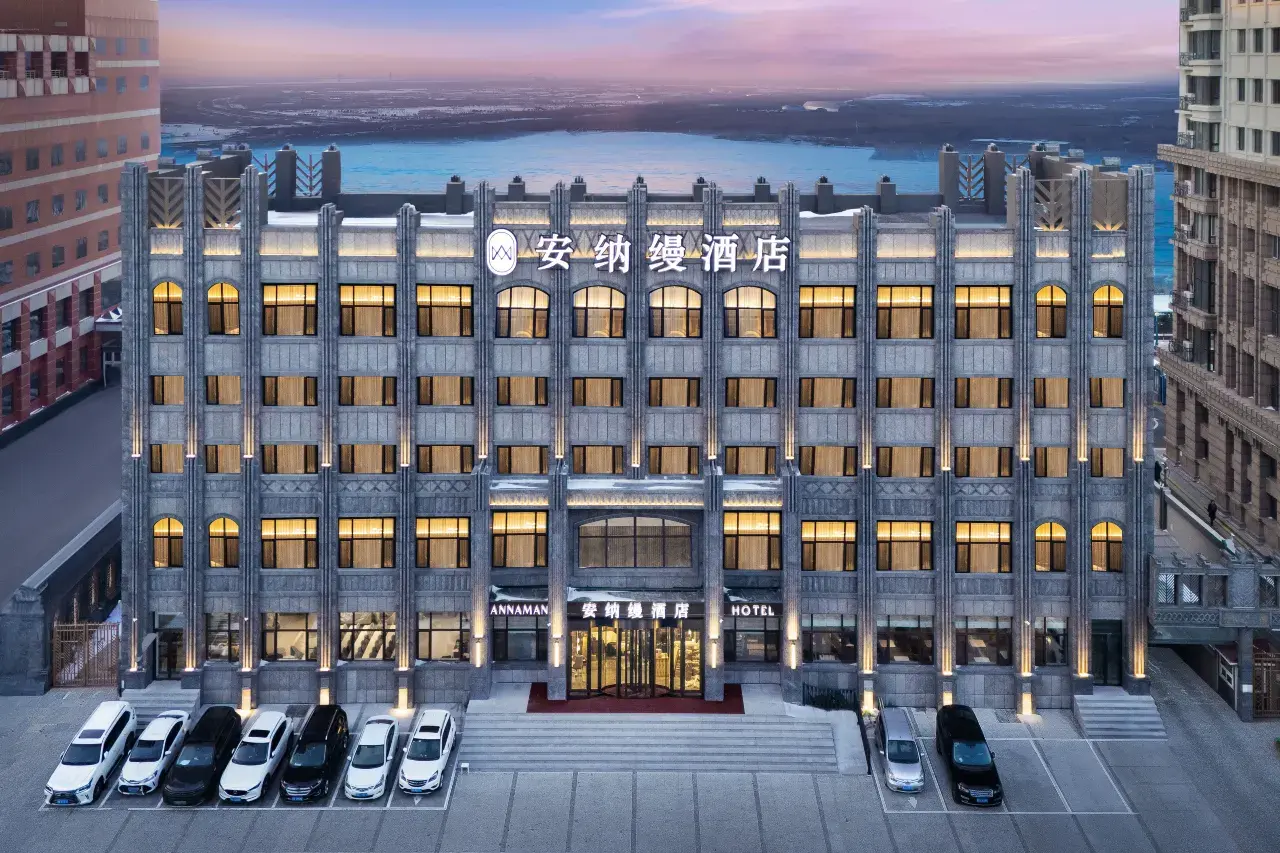
The Annaman’s own kitchen is part of the food day, not a fallback from it. The breakfast buffet (7:00–12:00) runs Chinese pastries, Western essentials and local dishes — reviewers single out the pan-fried fish slices as “an impressive and rare find”, which is exactly the kind of line we would not dare write ourselves. Handmade afternoon tea lands at 14:00 with fruit and small bakes, timed to the hour the cold has collected its tax; the front desk keeps drinks on all day; and warm milk arrives at night, which after an evening on Central Street at minus twenty tastes like the point of civilisation. Guests pacing a big eating day use the house rhythm deliberately: market at dawn, buffet late, tea as the bridge, dinner as the event.
🌭 Evening: Central Street, 1.6 km of cobblestones
The century-old stone handles every craving at once. Three stops make the walk: the Russian dining rooms — red velvet, borscht, breaded cutlets — for the city’s founding flavour; the hongchang counters, where Harbin’s red sausage is sold by the piece and eaten warm from the paper; and Madieer ice cream, eaten deliberately outdoors in minus twenty, because that is the tradition and, honestly, it is better this way. Between them, kvass by the bottle and the shop windows of a street that has been selling food since 1900.
And the side streets
Dumpling houses fill the lanes off the boulevard, and the deep cut is guobaorou — the sweet-sour crispy pork Harbin invented — best at the old-line restaurants a block or two off the main drag. The concierge keeps a current list of what is genuinely good versus merely famous, and it skews honest: ask, and you will be sent where the desk eats, not where the commissions point.
🦾 Late night: the robot has you covered
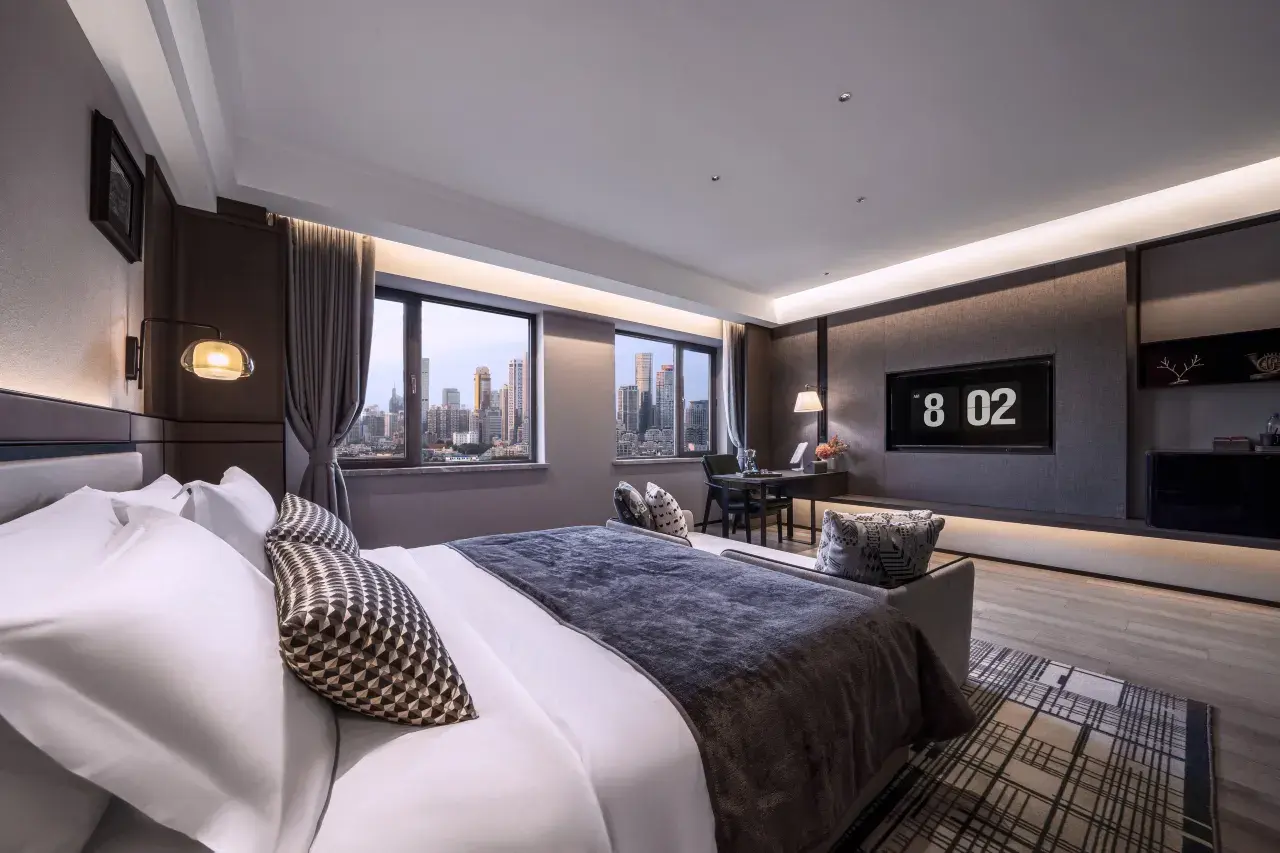
Back at the hotel, the 24-hour robot delivers whatever the evening appetite decided you needed — silently, without a knock, which nap-time parents and light sleepers agree is the quiet luxury under the quiet luxury. Order, thaw, and let the DeRUCCI mattress close the file on a day that started with cold noodles at dawn.
💡 Practical notes before you go
- Payments: set up Alipay or WeChat Pay with a foreign card before the trip — every stall and counter above takes them; cash is the backup.
- Timing: the market leads the day and closes by mid-morning; Central Street peaks after dark when the lamps are on; both work in one day without a taxi.
- Winter physics: outdoor eating is part of the culture (see: ice cream at minus twenty) — do it in short shifts and warm up between; the hotel’s rhythm is designed for exactly that.
- Portions: northeastern portions are honest. Order for the table, not the individual; the robot will bring more if you were wrong.
🙋 Frequently asked questions
What food is Harbin famous for?
Guobaorou (the original sweet-sour crispy pork), hongchang red sausage, northeastern dumplings, Madieer ice cream, kvass and the Russian inheritance — borscht and breaded cutlets — all within one walk of the hotel’s door.
Do I need cash for the morning market?
Not necessarily: Alipay and WeChat Pay (both now accept foreign cards) cover virtually every stall. Carry a small note as backup and scan as you go.
Is Madieer ice cream really eaten in winter?
Yes — outdoors, in minus twenty, deliberately. It is the city’s signature small defiance, and the frozen pavement keeps the drop less dramatic than you would think. Try it once between the sausage counters.
What are the hotel’s own food hours?
Breakfast 7:00–12:00, handmade afternoon tea at 14:00, warm milk service at night, and 24-hour robot delivery for everything else. Guests on a big eating day use the rhythm as the schedule’s spine.
📍 The bottom line
Harbin’s food day is a circle: dawn noodles at the market, a century of cobblestones at night, and a warm designer room — with milk service — waiting at both ends. Fifty metres from the river is also, it turns out, fifty metres from dinner.
Eat the city from this address
Check rates for your dates — and ask the desk for the current honest list when you arrive.
The Manan Fanyin Tatami Tea Room — the tea theme in room form →
✍️ Written and kept current by the Annaman Hotel front-desk team, No. 395 Youyi Road, Daoli District, Harbin. Last reviewed October 2026 — market hours and stall line-ups shift with the seasons; ask at the desk for the current map.
Добавить комментарий